-
Cleaner Packaging, Cleaner World
-
Cleaner Packaging, Cleaner World
THE CLEARINGHOUSE
The Toxics in Packaging Clearinghouse (TPCH) maintains the Model Toxics in Packaging Legislation and coordinates implementation of state legislation, based on the Model, on behalf of its member states, with the goal of promoting consistency across states. TPCH is a resource and single point of contact for companies seeking information on toxics in packaging requirements or an exemption.
Read more »Become a Member
Benefits include:
- Public technical assistance
- Forum for discussion & coordination with other states
- Outreach to stakeholders
- Packaging research and testing
- Legislative review
WHERE WE ARE
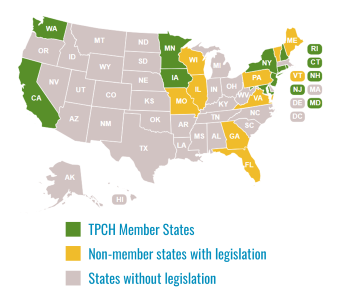
The Clearinghouse includes a states-only voting membership and an industry/public interest advisory group. The legislation has been successfully adopted by nineteen states.
Read more »
What’s New at TPCH
Updated TPCH Fact Sheet (Revised November 2023)
Updated Sample Certificate of Compliance (revised November 2023)
TPCH Guidance Document for 2021 Model Legislation Update (Posted Nov 2023)
